

7 Ways Industrial Design Drives Premium Perception & Startup Funding
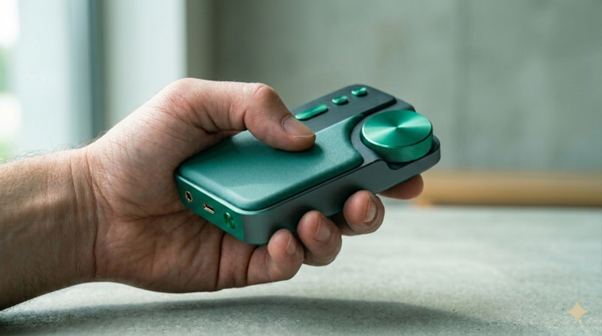
The Industrial Design Strategy: Engineering Premium Perception and Venture Success In today’s competitive hardware market, product success depends on far more than innovative technology. Customers, investors, and manufacturing partners often judge a product’s quality, usability, and production readiness long before they evaluate its technical capabilities. Industrial design for hardware startups plays a critical role in transforming engineering ideas into products that inspire confidence, communicate quality, and are ready for scalable manufacturing. When combined with mechanical product engineering, it creates products that are functional, manufacturable, and commercially successful. In crowded hardware categories, the products that succeed are rarely defined only by technical sophistication. They are the products whose form language, interaction quality, and material execution feel resolved from the very first interaction. This article explores seven dimensions of industrial design that separate forgettable products from iconic ones, and underfunded startups from well-backed ventures. For hardware startups, this is where the right design partner becomes critical. From concept development to manufacturing readiness, an experienced end-to-end product design support ensures that every decision—from ergonomics to materials to assembly—aligns with user expectations, investor confidence, and scalable production. 1. Human Centric Form: Ergonomics as Success Driver Elevated industrial design begins understanding how end users physically and emotionally interact with a product. Following Dieter Rams’ principle that good design makes a product useful, form development must resolve physical comfort, cognitive clarity, and intuitive interaction simultaneously. This is where ergonomic product design services become essential in translating human behavior into practical, user-centered form. If a product does not integrate naturally into how people hold, operate, or interact with it, no amount of engineering sophistication or visual refinement can compensate for that friction. In our experience, ergonomic issues rarely appear during the initial design phase. They typically emerge during prototype testing, when users struggle with grip angles, button placement, or prolonged handling. Small refinements based on this feedback—such as repositioning controls or adjusting contours—can significantly improve comfort, usability, and overall product acceptance. Reduced Interaction Friction: Compact, intuitive form factors reduce effort during everyday use through ergonomic geometry and thoughtfully designed physical controls. User Retention: Products that integrate seamlessly into daily behavioural routines through refined ergonomics encourage repeat usage, improving long-term adoption and customer satisfaction. Product Longevity: Designs based on real user behaviour are inherently more sustainable because they encourage repairability, prolonged usability, and reduced product obsolescence. Ergonomics is not a finishing layer within industrial design. It forms the foundation of meaningful product interaction, influencing usability, customer satisfaction, and long-term product success. 2. Visual Semiotics: The 5-Second Impression in Industrial Design for Hardware Startups Users and investors form critical judgments about a product within seconds. That first impression is shaped by visual semiotics, where surface quality, balanced proportions, and thoughtful form language communicate product quality before users experience its functionality. For industrial design for hardware startups, these visual cues play a critical role in building trust, communicating engineering maturity, and creating a strong first impression with both customers and investors. Clean geometry, controlled surfacing, and considered minimalism are not purely aesthetic decisions. They communicate engineering confidence, design maturity, and attention to detail. This level of refinement is achieved through experienced hardware product design services, where industrial designers and mechanical engineers collaborate from the earliest stages to align form, function, and manufacturability, resulting in products that are both visually coherent and production-ready. Dieter Rams articulated this through his principle that good design is “as little design as possible.” Removing unnecessary visual complexity creates stronger visual hierarchy and more coherent product semantics. In practice, visual refinement rarely happens in the first CAD model. It evolves through multiple prototype iterations, where small refinements to proportions, edge radii, surface transitions, and part lines significantly influence how users, investors, and manufacturing partners perceive product quality, even when the underlying engineering remains unchanged. Minimalist Design: Clean lines, balanced proportions, and controlled detailing communicate precision, engineering discipline, and confidence in the product’s design. Execution Confidence: A deliberate and consistent visual identity signals market readiness, while unresolved form language often suggests that the product is still in development rather than ready for commercialization. For hardware startups, visual refinement shapes first impressions long before functional evaluation begins. It signals engineering maturity, market readiness, and greater confidence to customers, investors, and manufacturing partners. 3. CMF: The Sensory Vocabulary of Value Color, Material, and Finish (CMF) is the sensory language that shapes how users perceive a product beyond their first impression. A well-defined CMF strategy influences tactile perception, material authenticity, and long-term product value while ensuring materials and finishes support efficient manufacturing and scalable production. To learn practical DFM techniques that improve manufacturability and reduce tooling costs, explore our guide on DFM for injection molding. Matte textures, brushed metals, and glass interfaces create a premium tactile experience that reinforces perceived product value and strengthens perceived value. By contrast, low-grade glossy plastics create a fundamentally different perception in both the hand and the mind. Premium Tactility: Matte finishes, brushed metallic surfaces, and glass interfaces create a tactile experience that users naturally associate with premium-quality hardware. Material Integrity: High-quality materials maintain structural and aesthetic consistency under stress and age with greater visual dignity than inexpensive plastics. Ethical Sourcing: Contemporary CMF strategy increasingly incorporates responsibly sourced materials, recycled substrates, and environmentally conscious finishing systems aligned with evolving consumer expectations. Material selection is no longer purely aesthetic. It is inseparable from performance, sustainability, and brand positioning. In practice, material selection is often refined through engineering reviews, prototype testing, and manufacturing feedback to ensure the final product balances user expectations, durability, and production efficiency. Material selection is rarely a one-time decision. Designers must balance appearance, durability, manufacturing methods, product cost, and long-term performance throughout development. For example, a prototype may be produced using materials that support rapid design iterations, while the production version shifts to an injection-molded glass-filled polymer to reduce cost, weight, and manufacturing complexity without compromising functional performance. Building a Hardware Product? Work with experienced mechanical product engineering experts to improve usability, reduce manufacturing risks, and prepare your product for production.
7 Ways Industrial Design Drives Premium Perception & Startup Funding Read More »