
July 2026

Treating Design Reviews as a Checklist Instead of a Decision-Making Process

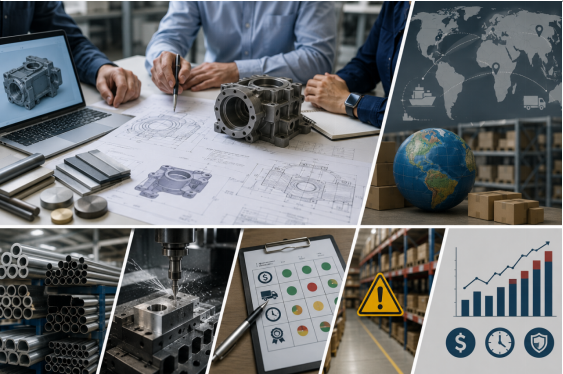
Design Review Mistakes That Lead to Costly Production Delays

A Design Review is one of the most important checkpoints in any Product Development Process. When engineering, manufacturing, and quality teams sit down to evaluate a design before it moves forward, they have a rare opportunity to catch problems while changes are still cheap. Companies across industries often partner with experts in mechanical product engineering in the US and Europe to validate manufacturability, identify design risks, and ensure products are ready for production before significant investments are made. A thorough Product Design Review can mean the difference between a smooth launch and a production line that grinds to a halt. The cost of finding design issues after tooling or production begins is dramatically higher than catching them during review. A flaw discovered on paper might cost a few hours of rework. The same flaw discovered after a mold has been cut, a fixture built, or a production batch run can cost tens of thousands of dollars and weeks of schedule slip. Effective reviews reduce redesign, delays, and manufacturing risk across the board. This article walks through 10 of the most common design review mistakes companies make and explains how to avoid them, so your next Engineering Design Review can catch critical issues before they reach the shop floor. Overview A Design Review brings cross-functional teams together to evaluate a product before it advances to tooling or production. Common mistakes, such as skipping early-stage reviews, ignoring tolerancing, or overlooking material availability, can delay production, raise engineering costs, and reduce product quality. Structured, cross-functional reviews that include manufacturing, quality, procurement, and supply chain input can improve manufacturability and significantly reduce overall project risk. 1. Skipping or Rushing Early-Stage Design Reviews (PDR/CDR) The Preliminary Design Review (PDR) and Critical Design Review (CDR) are two of the most valuable checkpoints in the Product Development cycle, yet they are often rushed when schedules tighten. The Preliminary Design Review (PDR) confirms that the overall design approach is sound before detailed engineering work begins, while the Critical Design Review (CDR) verifies that the design is ready for release to manufacturing. Skipping or compressing these milestones makes it much harder to identify technical and manufacturing risks before design freeze. Once a design is frozen, the cost of late design changes rises sharply because tooling, fixtures, supplier commitments, and production planning may already be in motion. Early stakeholder alignment during PDR and CDR helps prevent unexpected problems from surfacing downstream, when they are far more expensive and time-consuming to fix. 2. No Cross-Functional Team Involvement A Mechanical Design Review that only includes engineers misses critical perspectives. The strongest reviews bring together Engineering, Manufacturing, Procurement, Quality Assurance, Supply Chain, and Service & Maintenance teams, each contributing a different lens on the same design. A cross-functional design review brings together stakeholders with different responsibilities and decision-making priorities, helping teams identify technical, manufacturing, sourcing, quality, and service risks before they become production problems. Manufacturing flags process limitations before they become production blockers. Procurement identifies sourcing constraints early in the cycle. Quality Assurance raises inspection and tolerance concerns early in the process. Supply Chain flags lead-time and component risk. Service & Maintenance teams highlight long-term serviceability needs. These assembly and serviceability considerations can significantly affect production efficiency and cost; learn more about design decisions that reduce assembly time and manufacturing costs → The benefit of collaborative decision-making is that issues surface while they are still inexpensive to fix, rather than after commitments have already been made. When these perspectives are included early, teams can make better-informed design decisions and reduce the likelihood of costly redesigns, production interruptions, and late-stage changes. 3. Poor Version Control and Engineering Change Management (ECM) When multiple versions of a drawing circulate without clear labeling, different teams end up working from different versions of the design. This creates a serious risk of manufacturing errors, incorrect purchasing decisions, and costly rework. Production might be machining to Rev C while procurement ordered materials against Rev B specs. This mismatch often isn’t caught until parts fail to fit or an inspector flags a discrepancy, by which point time and material are already lost. Engineering Change Orders (ECO) An ECO is the formal instruction to implement an approved change, whether it’s a dimension update, material substitution, or process revision. It typically documents what’s changing, why, who approved it, and the effective date. A well-controlled ECO process ensures that engineering changes are formally reviewed, approved, documented, and communicated before they affect production. Without a proper ECO process, changes get made informally through emails or verbal instructions, which are easy to miss and impossible to audit later. Engineering Change Notices (ECN) While an ECO authorizes a change, an ECN communicates that a change has happened. It’s the notification that pushes updated information out to everyone affected, manufacturing, quality, purchasing, and suppliers, so no one is left working from stale data. This communication step is critical because an approved engineering change is only effective when every affected team receives and implements the updated information. Skipping this step is a common reason outdated drawings keep resurfacing even after a design has already been revised. Drawing management This covers how drawings are stored, labeled, and retrieved so the current revision is always easy to identify. Simple conventions, like consistent revision blocks, clear naming, and restricted edit access, prevent the everyday mix-ups that cause the biggest downstream headaches. A controlled drawing management process should also make it clear which revision is approved for manufacturing and prevent obsolete drawings from being used accidentally. PLM/PDM systems Product Lifecycle Management and Product Data Management systems give this process real teeth by centralizing files, enforcing revision control, and tracking approval history automatically. Rather than relying on individuals to remember which version is current, the system itself controls access and visibility, cutting down on human error significantly. These systems also provide traceability, making it easier to identify when a change was made, who approved it, and which teams or suppliers need to act on the updated information. Preventing outdated files from reaching production The final safeguard is making sure obsolete drawings simply cannot reach the shop

Design Review Mistakes That Lead to Costly Production Delays Read More »
Improve Design for Manufacturability (DFM)

10 Reasons Why Industrial Design and Mechanical Engineering Must Work Together

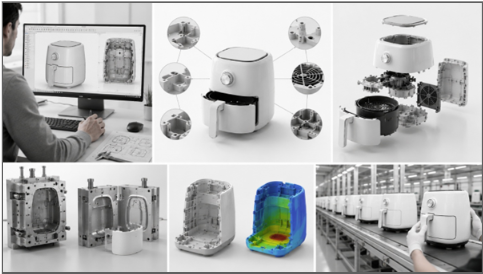
Most product failures do not happen on the factory floor. They happen months earlier, when industrial design and mechanical engineering work in separate lanes instead of one shared process. A product can look stunning on screen and still fail in production if structural feasibility, tooling limitations, assembly logic, and manufacturing constraints are not considered from day one. When industrial designers and mechanical engineers collaborate early, businesses reduce costly redesigns, shorten development timelines, improve Design for Manufacturability (DFM), and launch products that are both visually appealing and mechanically sound. This is especially important for startups and growing manufacturers, where every prototype cycle and tooling decision carries real financial weight. A single overlooked clearance issue, tolerance stack-up, or unrealistic mold geometry can add weeks to a launch schedule and significantly increase development costs. Building a shared workflow between industrial design and mechanical engineering from the earliest sketches helps protect product quality, manufacturing efficiency, and the bottom line. The following ten reasons explain why this collaboration is essential for successful product development. Key Benefits of Integrating Industrial Design and Mechanical Engineering Before diving into the details, here is a quick snapshot of what cross-functional collaboration delivers. It reduces costly design revisions during development, improves Design for Manufacturability (DFM), and Design for Assembly (DfA), and lowers injection mold tooling costs. It also simplifies product assembly, accelerates prototype validation, and improves component packaging, and enhances product reliability and durability. Beyond the production line, it reduces manufacturing risks, speeds up product launches, improves product quality and user experience, and supports scalable production as a business grows.  Industrial Design Mechanical Engineering Combined Business Benefit Product aesthetics Structural integrity Better product quality User experience Manufacturability (DFM) Lower production costs Ergonomics Material selection Improved reliability Product form Assembly optimization (DfA) Faster product launches Brand identity Thermal & structural performance Production-ready products 1. Prevent Costly Product Redesigns Later in Development When industrial designers and mechanical engineers review a product concept together during the early stages of development, they can identify packaging constraints, structural feasibility, manufacturability, and assembly issues before a single prototype is built. This proactive approach helps reduce engineering change orders (ECOs), avoid costly redesigns after prototyping, and keep project timelines and development budgets on track.  According to engineering cost studies, the cost of implementing design changes increases significantly as projects progress from concept design to tooling and production. Identifying design issues early helps minimize engineering changes, reduce development costs, and prevent schedule delays later in the product development process. Redesigns rarely stay contained to a single part. A change to a wall thickness can ripple into the mold, the assembly fixture, and the supplier quote, multiplying both cost and delay. Catching these conflicts at the concept stage, while changes are still just sketches and CAD files, is dramatically cheaper than catching them after a tool has already been cut. Many costly redesigns can be prevented through a structured design review process that identifies manufacturability, assembly, and production risks before development progresses. Learn more about the  design review mistakes that lead to costly production delays. Engineering Scenario: Consumer Kitchen Appliance During the development of a consumer kitchen appliance, the industrial design team proposed a sleek, compact enclosure to enhance the product’s visual appeal. During the concept phase, mechanical engineers identified potential packaging constraints between the heating assembly, airflow components, and electronic controls that could have led to multiple redesigns during prototyping. By working together early, both teams optimized the internal layout, refined the enclosure design, and ensured sufficient space for critical components without compromising the product’s aesthetics. Addressing these challenges before prototype development reduced engineering changes later in the project and helped prepare the design for efficient manufacturing. 2. Balance Product Aesthetics with Engineering Performance A great-looking product still has to function reliably. Collaboration ensures attractive designs meet structural requirements and that ergonomics are optimized without compromising functionality. Teams can address thermal, mechanical, and environmental constraints early, which improves user experience while maintaining reliability and prevents conflicts between styling goals and engineering requirements.  Tension between aesthetics and engineering is one of the most common sources of friction in product development. A designer may want thin, seamless surfaces, while an engineer needs enough wall thickness to survive a drop test. Resolving that tension together, rather than passing a finished concept down the chain, usually produces a design that satisfies both goals instead of forcing one team to compromise late in the process. Engineering Scenario: Premium Coffee Machine While designing a premium coffee machine, the industrial design team proposed a seamless front panel with hidden fasteners to achieve a clean, modern appearance. During engineering development, the mechanical team identified that the original design restricted airflow around the heating system and made routine servicing difficult. Working together, both teams refined the internal structure by redesigning mounting features, improving ventilation paths, and integrating hidden fastening solutions that maintained the product’s premium appearance. The final design achieved the desired visual appeal while meeting structural, thermal, and serviceability requirements without compromising manufacturing feasibility. 3. Optimize Internal Component Packaging Maximizing available internal space allows for efficient placement of batteries, PCBs, connectors, and mechanical components, reducing interference between parts. This simplifies assembly and servicing while supporting compact, user-friendly product designs without compromising functionality. Internal packaging decisions made early often determine how much flexibility a product has for future revisions. A layout designed with adequate clearances and modular component placement makes it easier to upgrade batteries, integrate additional electronics, improve airflow, or accommodate regulatory changes without redesigning the entire enclosure. Engineering Scenario: Consumer Kitchen Appliance s a consumer kitchen appliance evolved to include additional electronic features, the available space inside the enclosure became increasingly limited. The challenge was to accommodate the heating assembly, control PCB, airflow system, wiring, and removable basket within a compact product without increasing its external dimensions. By carefully reorganizing the internal component layout, optimizing mounting features, and improving cable routing, the engineering team created a more efficient package that simplified assembly and improved serviceability. The optimized layout also provided flexibility for future product

10 Reasons Why Industrial Design and Mechanical Engineering Must Work Together Read More »