engontech

Custom IoT Enclosure Development: From Sketch to Prototype

In the fast-paced world of the Internet of Things (IoT), your product is only as good as its enclosure. A well-made enclosure doesn’t just house electronics; it defines durability, usability, thermal management, manufacturability, and brand perception. Whether you’re an engineer bringing your design to life, an entrepreneur with a functional idea, or a design lead guiding a new product roadmap, the right mechanical development path is crucial. At Engon Technologies, we focus on custom mechanical solutions that turn raw ideas into ready-to-manufacture enclosures. In this guide, we outline the journey from sketch to prototype, the tools that can shape your success, and key preparations before you consult a mechanical firm. Why Custom Enclosures Are Important for IoT Success  Off-the-shelf enclosures rarely meet the unique challenges IoT devices face, such as thermal dissipation, sensor placement, waterproofing, antenna clearance, or mounting configuration. As devices become smaller and features multiply, custom mechanical engineering design services become vital. Engon has worked with startups and established OEMs to create enclosures that go beyond looks. We focus on functionality, enabling quick changes and short production runs, particularly in high-mix, low-volume use cases common in IoT. The Process Flow: From Idea to Prototype  While every product development cycle is unique, the foundation remains steady. Here’s how your enclosure develops: Concept Ideation You may begin with a napkin sketch, a block diagram, or a breadboarded electronics board. This initial concept stage is where you define function, user experience, and mechanical constraints. Inputs at this stage include: Target dimensions PCB size and layout Port types and placements Environmental requirements (IP rating, temperature) Aesthetic expectations Engon collaborates early to set realistic manufacturing parameters from the start. CAD Design (Creo, SolidWorks) We use software like Creo and SolidWorks to create detailed 3D models. This stage covers: Internal component fit Fastening methods (screws, snap-fits) Material selection (ABS, polycarbonate, aluminium, etc.) Preliminary draft angles for moldability This is where custom mechanical solutions begin to take shape. Simulation and Analysis Before creating a physical prototype, digital simulations provide valuable insights. These include: Finite Element Analysis (FEA) for structural integrity Thermal simulation for ventilation or heatsinking Drop tests and IP sealing simulations These predictive models help avoid costly retooling and delays. Mechanical Prototyping Services Now it’s time to test in the real world. At Engon, our mechanical prototyping services consist of: 3D printing (SLA, FDM, SLS) CNC machining Vacuum casting for elastomer or rubber parts Sheet metal prototypes for rugged enclosures Based on timelines, functionality, and cost, we guide clients on the best way to validate fit, form, and function. Tools of the Trade: Why Software and Machinery Matter  Our toolbox is built for precision, speed, and iteration. Here’s what we use: CAD Platforms: Creo for parametric design, SolidWorks for assemblies and part libraries Simulation Tools: Ansys, SolidWorks Simulation Prototyping Hardware: Form Labs SLA printers, Tarmac CNCs, and multi-material filament printers Reverse Engineering Services for mechanical parts: 3D scanning and digital reconstruction for redesigning legacy parts or competitive benchmarking Each tool is chosen to speed up your timeline and minimise development errors. How Engon Manages Short Production Runs for IoT Devices  Unlike mass manufacturers, Engon is suited for low to mid-volume production, ideal for IoT startups and agile teams. Here’s how: Modular design practices: We create designs that can scale or be reused across device variants. Vendor partnerships: Our trusted local and offshore partners provide cost-effective manufacturing, even for runs under 500 units. Rapid tooling: For injection moulding, we offer soft tooling or aluminium mould options for quick turnaround and lower initial costs. Design for Assembly (DFA): Each prototype is made with manufacturing in mind to reduce labour and errors. Our mechanical engineering design services are tailored to help you move from prototype to pilot batch with minimal friction. When Reverse Engineering Is Useful  Sometimes, the journey starts with existing designs. You may need to: Redesign an existing enclosure to fit a new PCB Replace discontinued parts with new equivalents Improve legacy designs with modern manufacturing techniques This is where our reverse engineering services for mechanical parts come in. We use precise 3D scanning, tactile measurements, and comparative CAD to reproduce and enhance mechanical components, often adding manufacturability or new features in the process. What to Prepare Before Consulting a Mechanical Firm  To maximise your first consultation with a firm like Engon, be prepared. Here’s a quick checklist: Functional Requirements  What is the enclosure protecting? What’s the user interaction model—wall-mounted, wearable, handheld? PCB and Component Info  Provide accurate CAD files or datasheets. Indicate component height and clearance zones. Environmental Constraints  Waterproof? Dust-proof? Impact resistance? Operational temperature range? User Experience Goals  Do you need LED indicators, touch interfaces, or display windows? Are there ergonomic requirements? Volume Expectations  Are you planning for 10, 100, or 10,000 units? Being prepared leads to faster iterations, better cost predictions, and more realistic timelines. The Engon Advantage: Partnering for Speed and Precision  At Engon Technologies, we design for reality, not just the screen. Our experienced team brings expertise in: IoT hardware enclosures (sensors, gateways, wearables, medical devices) Material optimisation for thermal management Agile design feedback loops Vendor-vetted prototyping and tooling workflows We don’t just deliver CAD files; we deliver clarity. You’ll receive: A development roadmap Design files that meet real-world manufacturability standards Functional prototypes for testing and validating A smooth transition to production Whether you’re working on your first device or your tenth product line, our mechanical engineering design services are designed to reduce friction and speed up innovation. Design Iteration: Why First Prototypes Are Just the Beginning  One common misunderstanding in enclosure design is thinking the prototype will be perfect. In reality, product development, especially for IoT enclosures, is an iterative journey. Your prototype serves as a baseline, not a finished product. It validates whether the components fit, whether thermal issues are manageable, and whether user interaction feels intuitive. But once it’s in your hands, real-world insights start to emerge: – Buttons might feel too stiff. LEDs might not be bright enough through translucent panels. A port might interfere

Custom IoT Enclosure Development: From Sketch to Prototype Read More »
Dental Implant Case Study: Product Engineering

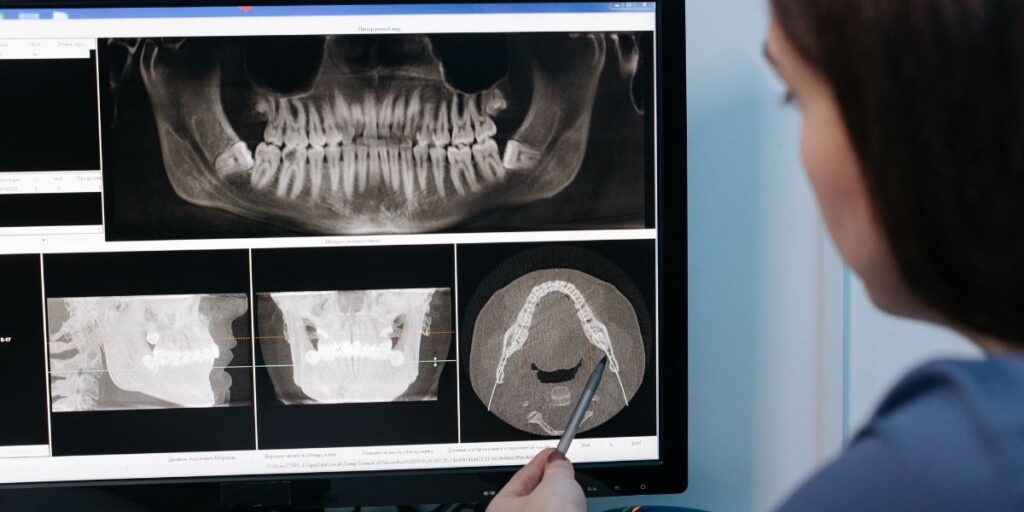
This case study gives an insight on how Engon worked with an esteemed research institute to provide innovative product engineering solutions for a persisting dental surgery issue that was affecting dental surgeons working on dental implants. Due to the complexity of the dental implant cases, we also had to provide handcrafted solutions for each case. Let’s dive in! Services Employed: Product Engineering  Mechanical Design Industry Served: Medical About the Challenge There are dental implant surgery cases where existing methods of using powder or pellets can not be used to resolve cavities called sockets. While powder can be inconvenient to work with, pellets might not be able to fill the sockets properly. So it becomes difficult for the dental implants to be placed in the right place of the patients’ mouths. Moreover, dental surgeries being expensive and sensitive, there was no room to practice trial-and-error method to find the right solution for this issue. Furthermore, each dental implant case is unique. So, the solutions can not be mass manufactured. How ENGON employed Product Engineering to Resolve Socket Problems in Dental Implant Cases The Engon team worked with all stakeholders to achieve a thorough understanding of the problem and challenges involved. We focused on working on an innovative solution to develop and engineer dental implants for such cases based on available technologies. By studying the problem around implant surgery, we were able to come up with a solution right at the development stage of the implant itself. Since it was clear from the get-go that we will be developing handcrafted solutions for each eligible dental implant case, we started with the intra oral scans of the patient. These scans were converted into the CBCT format, a 3D digital file of the scan which also shows the hollow location (the socket) that needs to be filled for the dental implant to be placed. Hence, the design of the implant was based on each CBCT. Conclusions Design for DFAM (Design for Additive Manufacturing) Our product engineers took complete ownership on development. We extracted models from patient scans to create the right dental implants that took care of the sockets in the patients. By working hand-in-hand with the R&D team, as well as our cross-functional teams of mechanical designers, analysts, and engineers, we pushed through the engineering hurdles and used 3D printing (additive manufacturing) to develop these dental implants. Successful prototyping and testing Another major focus was ease-of-use of these special dental implants by the dental surgeons. We sourced the needed materials from our network of reliable suppliers, and started mock testing. Even though we were working with a smaller sampling due to the constraints of this project, we achieved the right solution with our expertise and experience. Such due diligence and smart performance of the Engon team has garnered trust and reliability in the industry as the engineering outsourcing partner for businesses worldwide. Choose us to obtain the best customized solution for your project.  Boost product quality with decreased time to market with our expertise in Product Engineering.

Dental Implant Case Study: Product Engineering Read More »

Enhanced Packaging Case Study: Consumer Products

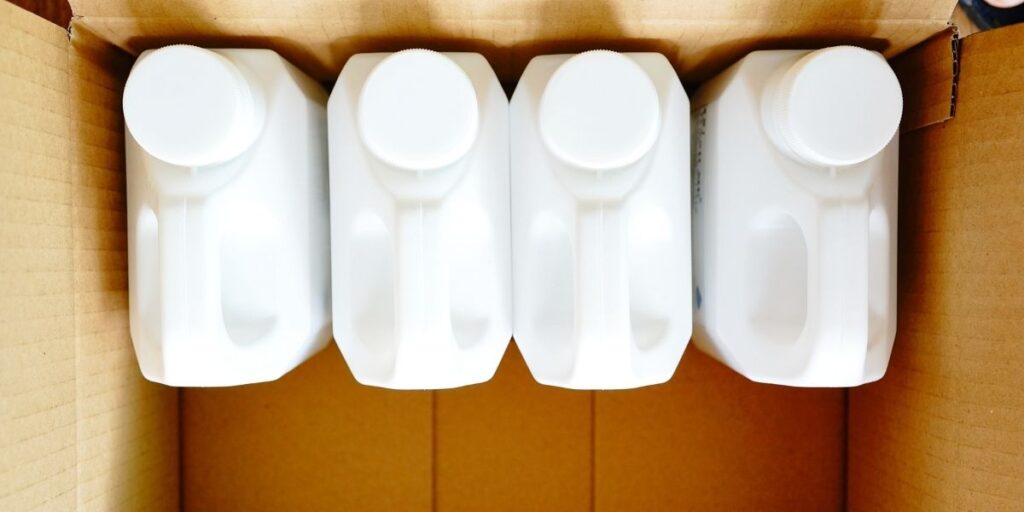
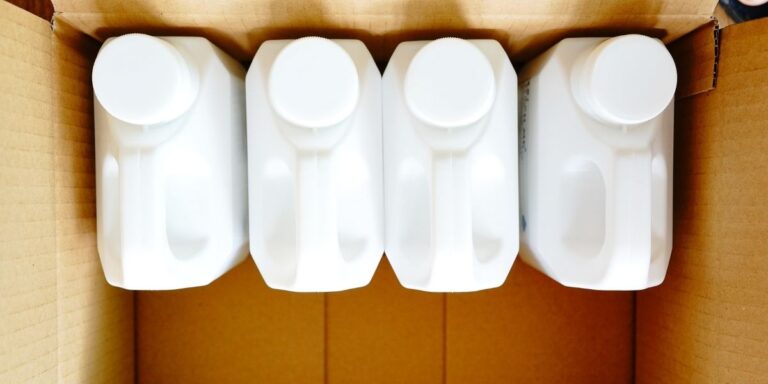
In this case study, we are sharing how Engon worked with a Client who was selling industrial chemical products to other businesses in bulk, but facing major issues with mishandling during transportation. The Client was also looking for ways to maximise savings during production and transportation, while enhancing the product to edge out the competition. Let’s dive in! Services Employed: Plastic Design & Engineering  Benchmarking Reverse Engineering 3D Modeling Mold Design Mechanical Analysis Prototyping Industry Served: Industrial & Heavy Equipment About the Enhancement The existing packaging of the product was failing during transportation, thus resulting in unreliable delivery & financial losses. The Engon team started the project by testing the existing packaging and understanding root causes of the numerous issues. As a standard, we conducted benchmarking with global as well as domestic competitors to work on enhancing the aesthetics and branding points of the overall product itself. How ENGON employed Plastic Engineering to Resolve Packaging Problems Our focus was to engineer the whole packaging of the product to resolve the issues arising from transportation, and making it easier to handle and use these products, whether in the warehouse, en-route, or in use. The analysts and plastic engineers worked on the feedback given by the stakeholders who were handling these products at every stage of the product lifecycle. We were working to lessen the probability of failure. So we worked extensively in mechanical analysis and 3D modeling to validate the design. With great efforts in plastic engineering, we were able to achieve 19% reduction in material used, setting new standards. This reduction was a result of the innovative tooling solutions we were able to provide due to our expertise in mold design. With such a reduction in material usage, we were able to bring down overall production costs as well. The new enhanced packaging was able to withstand long distances in transportation without rupturing. And human errors with stacking or dropping products did not automatically mean loss to the Client anymore. Conclusions Design for manufacturing intent Our plastic engineers took complete ownership of the life cycle of the product. The product itself was working well. However, transportation and mishandling issues were affecting the Client a lot. With the new enhanced packaging, we were able to resolve the issues. Additionally, the Engon team was also able to distinguish the product from a crowd of competitors and improving brand recall. Successful prototyping and testing Prototyping the new packaging of the product helped in evaluating its technical feasibility. It also helped in determining if the materials used are durable and capable of withstanding the wear and tear of use. We were helping the Client to reduce financial losses from unreliable delivery as well as issues from transportation and mishandling. Thus, prototyping helped in testing the new enhanced packaging – we involved stakeholders in the testing to get real-time feedback. Such due diligence and smart performance of the Engon team has garnered trust and reliability in the industry as the engineering outsourcing partner for businesses worldwide. Choose us to obtain the best customized solution for your project.  Protect your product better and boost your customer experience with our prowess in Plastic Engineering.

Enhanced Packaging Case Study: Consumer Products Read More »

air nozzle case study engon technologies

Product Optimization Case Study: Air Nozzle

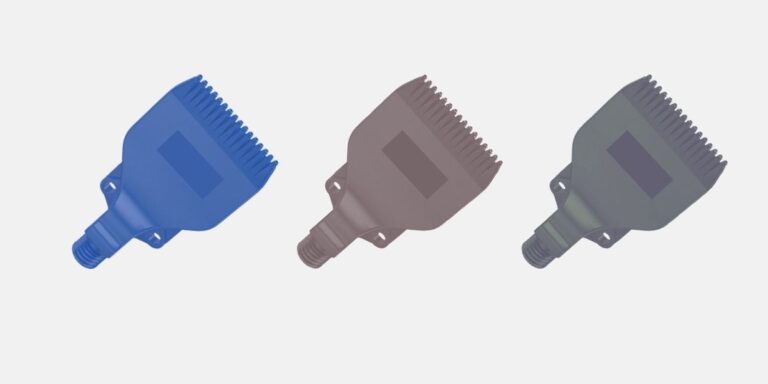
In this case study, we are illustrating how the Engon team was able to upgrade the functionality and overall aesthetics of a product in the industrial and heavy equipment industry. Engon worked with the Client to fill a key gap in their product portfolio – the Client was missing high revenue products in their offerings, due to which their competition had a bigger market share. Let’s dive in! Services Employed: Product Engineering  Mechanical Design Benchmarking Reverse Engineering Industry Served: Industrial & Heavy Equipment About the Air Nozzle Air nozzle is a device used to disperse air or steam in a targeted manner. The air nozzles in our project had a flat fan or solid stream spray pattern. Due to its flat shape, the sound level and air consumption of such nozzles are very low when providing a strong blow off force. These air nozzles are used to blow off materials heavier than the usual liquid or dust. How ENGON employed Product Engineering to Optimize the Existing Air Nozzle By benchmarking against the competition – the Client’s direct competitors, as well as similar products globally – we determined our focus to be on the overall aesthetics of the product. Our emphasis was to improve the look and feel of the product, while improving its technical performance. We conducted surveys and discussions with the Client sales teams to gain insight into their target customer psyche. The results pushed us to focus on upgrading the product better than the competition. Our product engineers were able to solve engineering problems, as we started optimizing the design, and getting into DFM by understanding the manufacturing processes involved. The results were clear. Our upgraded design filled the gap in the Client product portfolio. The chosen materials were more suitable for the manufacturing process, and we were able to reduce the time-to-market race with the new product while optimizing its technical performance. Conclusions Design for manufacturing intent Thanks to the team’s incredible understanding of the manufacturing process, we were able to avoid hurdles in the production stage of the project. We were able to engineer air nozzles that are more energy efficient as compared to the competitor nozzles. With extensive reverse engineering, we were also able to achieve lower noise levels. Successful prototyping and testing We discovered conventional gaskets can not be used in the newer and improved version of the product, so we provided innovative solutions to the Client. By prototyping, we were able to validate the design of the product. We then shared our prototypes with the stakeholders, such as sales team, to get real-time feedback and further optimize the overall design of the product. Such due diligence and smart performance of the Engon team has garnered trust and reliability in the industry as the engineering outsourcing partner for businesses worldwide. Choose us to obtain the best customized solution for your project. Enhance your product to make it more appealing to consumers with our Product Optimization services.

Product Optimization Case Study: Air Nozzle Read More »

Product Localization Case Study: Ladle Cart

Product Localization Case Study: Ladle Cart

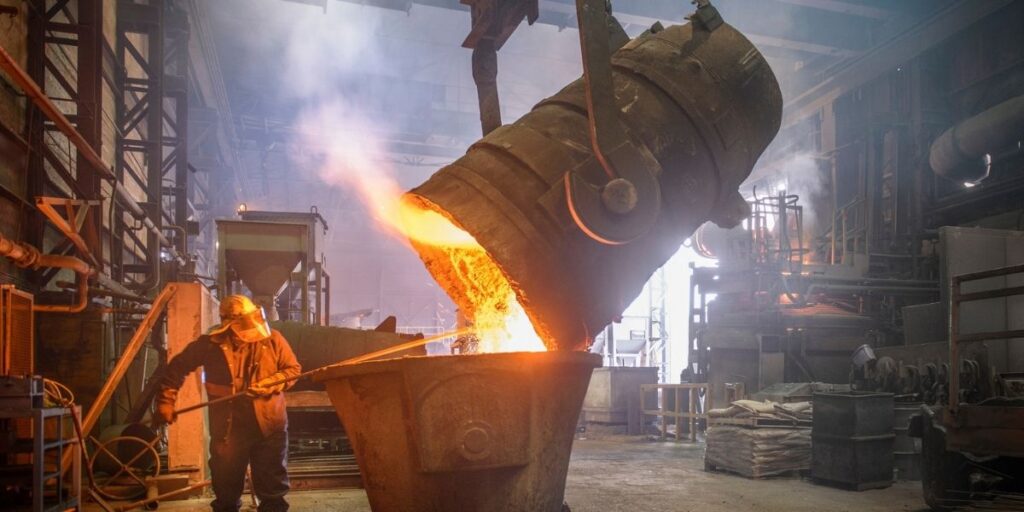
This case study gives an insight into how the Client and Engon teams worked together to introduce an existing product in a new market. The existing product, aka, the Ladle Cart, had to be modified to become fully compatible with DIN standards so as to be able to enter the German (European) market successfully. Let’s dive in! Services Employed: Product Localization  3D Modeling Services Mechanical Design Industry Served: Industrial & Heavy Equipment About the Ladle Cart A ladle cart is a type of vehicle which is used to collect hot molten iron alloys, mild steel, and various alloys of steels in foundries. It can have a customized load capacity from 1 ton to 1,000 tons. The transfer cart is designed to resist high temperatures and to work continuously for all 7 days a week. Heat insulation material is used in the body of the cart to avoid the influence of high temperature on the electric control, transmission parts and table. A software system is used to control and manage safety of the ladle cart. About the Product Localization of the Ladle Cart Ladle carts are used in extreme environments. In the heavy-equipment industry, if the ladle cart stops for just one hour, the company can lose up to 1000 tons of production. Engon was working with a Client whose Ladle Cart was successful in the North American region, but had to be modified as per DIN standards so that it could enter the German/European market. As such, the Engon team had to focus on their mechanical design and 3D modeling expertise to ensure a compliant product with a reduced time-to-market duration to conquer this new market as well. How ENGON and the Client worked on localizing the modified Ladle Cart in the German market. At Engon, we understand every foundry is unique, specific to their geographical location. Even when our Client had a product successful in the North American region, we had to focus on modifying the existing ladle cart to be compliant with the DIN standards of the European, specifically German, market, and dominate this new market. Armed with newer and better technology, we were able to upgrade the ladle carts to last longer, run safer and cost less money per tonne of metal melted. Next, we had to work on localizing the modified ladle cart in the German market. Thanks to our cross-functional team of experts with their thorough understanding of standards, we were able to infiltrate the German market successfully. We worked with the Client in implementing the standards & solving challenges that it poses. With such systematic implementation with part numbering system to create efficient subassemblies and assemblies, we were able to optimize the workflow, and implement seamless team communication for future design. Conclusions It’s been a non-stop localization process Over the past two years, we have completed scores of localization and adaptation tasks, thus freeing up time for the client to deal with other priorities. There’s more success when design intent is kept in mind Design intent allows you to modify. Since one of the main goals of this project was to enter a brand-new market, the Engon experts were flexible to keep design intent in mind. Doing so helped reduce material usage, production time, and costs, thus adding more value to the product. Our mechanical designers and 3D modeling engineers helped identify possible design flaws by analyzying the design through simulation software. Such careful design analysis led us to make the product more safer and durable, without compromising the quality of the ladle cart while getting it to the market. Such due diligence and smart performance of the Engon team has garnered trust and reliability in the industry as the engineering outsourcing partner for businesses worldwide. Choose us to obtain the best customized solution for your project. Transform your business to blend in seamlessly with the audience and market you want to target with our product localization expertise.

Product Localization Case Study: Ladle Cart Read More »