


When making things, tight budgets often lead teams to choose less expensive engineering help. At first glance, that choice seems like it cuts expenses. Yet down the line, problems start piling up during actual building work. The so-called budget option tends to trigger repeated design changes, fixes to molds and tools, parts that do not align properly, and shrinking profits-especially across manufacturing programs in the US and Europe, where labour, tooling, and compliance costs are significantly higher.
What initially appears as savings often results in rising manufacturing rework cost, especially when pilot runs expose flaws, scaling gets shaky, suppliers clash, changes pile up. Many companies exploring engineering outsourcing for US manufacturing SMEs underestimate how early design shortcuts translate into downstream production instability. At first glance, cheap outsourced engineering seems fine, just numbers on a page. Only after things move forward do the real expenses emerge. When trouble hits, money can’t be pulled back, timelines hold firm, and fixes demand more time and cash.
This piece reveals seven unseen ways low-cost engineering hikes up rework expenses in production – while showing fixes via smart design-to-manufacturing alignment. What looks like savings at first often backfires later downstream.

What Drives Manufacturing Rework Cost in Production in US and Europe?
Something going wrong on the factory floor does not come from a single disaster. Small oversights pile up, especially when planning how parts go together. Decisions made too quickly in design often ignore how things actually get built. Tolerances that seem fine on paper cause trouble once assembly begins. Methods intended to simplify manufacturing sometimes have the opposite effect when applied without care. Many structured engineering firms such as Engon Technologies emphasize early production validation precisely to prevent these downstream disruptions.
Over time, these misalignments directly increase manufacturing rework cost, especially when assembly variation, scrap, and inspection sorting become routine rather than exceptions.
The Real Cost of Engineering Change Orders (ECOs)
A single change in engineering might keep things moving forward. Yet when those changes multiply fast – midway through testing or full-scale builds – it often points back to early oversights. Mistakes made while shaping the design tend to surface later as a flood of adjustments. What looks like progress can actually be catching flaws too late.
Late ECOs create:
- Tooling modification cost
- Production line stoppage due to design errors
- Supplier renegotiation
- Revalidation and FAI repetition
- Inventory scrap and rework
Few realize how fast expenses climb when engineers alter designs late in the process – tooling shifts right after documents get updated, while suppliers scramble to adapt. Assembly methods reshape just as inspections tighten. One tweak sparks chain reactions across every corner of production, rapidly increasing manufacturing rework cost across tooling, validation, and supply chain operations.
How Poor DFMA Increases Scrap and Revalidation
One thing about checklist-driven DFM reviews – they miss the point of real DFMA work. Surface-level inspections tend to overlook what matters.
- Validation of process capability using Cp and Cpk
- Statistical tolerance stack-up
- Ramp-up yield modelling
- Supplier process variability
When DFMA lacks quality, output takes a hit right away. Parts get tossed more often than before. Testing starts again, without warning. The path to steady manufacturing wobbles. Tools that model production flow are available, yet still ignored. Low-cost design teams skip them, even when managing high-volume programs, leading to a sharp rise in manufacturing rework cost during validation and ramp-up.
Tolerance Errors and Their Impact on Assembly Yield
Fine margins shape spending more than most expect. Cost bends where precision begins.
Too much tightness in specs makes machining pricier. When tolerances are too loose, parts won’t fit right, causing fixes later. Getting it just right means using GD&T smarter, backed by number patterns that predict variation.
A few microns might seem tiny when you’re holding a prototype. Yet multiply that across ten thousand units, and suddenly gaps appear where nothing fits right. One overlooked curve, one unchecked edge – soon the line slows down. Mistakes don’t grow loud. They spread quietly, like cracks in plastic under heat, gradually driving up manufacturing rework cost across assembly, inspection, and scrap management.
How Cheap Engineering Triggers Engineering Change Orders
Out on its own, budget-focused design rarely talks to the machines it needs. Without that link, fixes pile up later because nobody asked the people who built things. Mistakes repeat when plans ignore what happens after decisions are made. This disconnect is common in poorly structured engineering outsourcing for US manufacturing SMEs, where design teams operate far from real production constraints.
Late Design Changes After Tooling Investment
Heavy expenses hit hard when tools change post-mold cut. After money gets locked in, small tweaks demand fresh spending.
- Tool-safe design compromise
- Mold welding or re-machining
- New inserts
- Additional sampling
A surprise risk showing up post-funding burns through budgets faster than almost any other mistake in design work.
ECO Impact on Production Schedules
When suppliers deliver late, production timelines shift without warning. Inspection sign-offs drag; everything waits behind them. Machines run only after the investments pay back their base cost. Timing bends around each of these anchors.
An eco launched amid a ramp-up
- Delays product launch
- Increases validation cost
- Triggers supplier-driven redesign
- Reduces forecast confidence
When a product launches late, the money lost usually surpasses what was saved during development.
Cost of Revalidation and Tool Modifications
Each change to the tools kicks off a fresh start
- First Article Inspection (FAI)
- PPAP documentation
- Capability studies
- Functional testing
Costs from revalidating manufacturing grow fast. Early savings in design vanish when tests are redone again and again.
Why Superficial DFMA Increases Manufacturing Rework Cost in US and Europe
Checklist-Based DFM vs Engineered DFMA
There is a fundamental difference between a DFM checklist and real DFMA engineering.
A checklist might confirm:
- Minimum draft angles
- Basic machining feasibility
- Standard material selection
Engineered DFMA analyzes:
- Process drift and variation
- Cp, Cpk alignment with functional tolerances
- Digital manufacturing simulation
- Supplier capability mapping
The difference between DFM checklist and real DFMA engineering determines whether a design survives mass production.
Process Capability (Cp, Cpk) Misalignment
Designs often specify tolerances tighter than supplier capability can consistently achieve.
When Cp/Cpk analysis is not aligned early:
- Assembly variation increases
- Scrap rises
- Inspection sorting becomes routine
- Margin erosion accelerates
Few realize how much tolerance settings affect production expenses – until things start going off track during scale-up.
Ramp-Up Yield Failures Due to Weak DFMA
Ramp-up yield engineering requires proactive simulation and supplier collaboration.
Manufacturing ramp-up failures due to weak DFM typically include:
- Unexpected process drift
- Alternate material risk exposure
- Tooling interference
- Assembly ergonomics constraints
Without simulation-driven DFMA, production feasibility is assumed — not validated.
The Hidden Lifecycle Manufacturing Rework Cost Beyond Initial Engineering
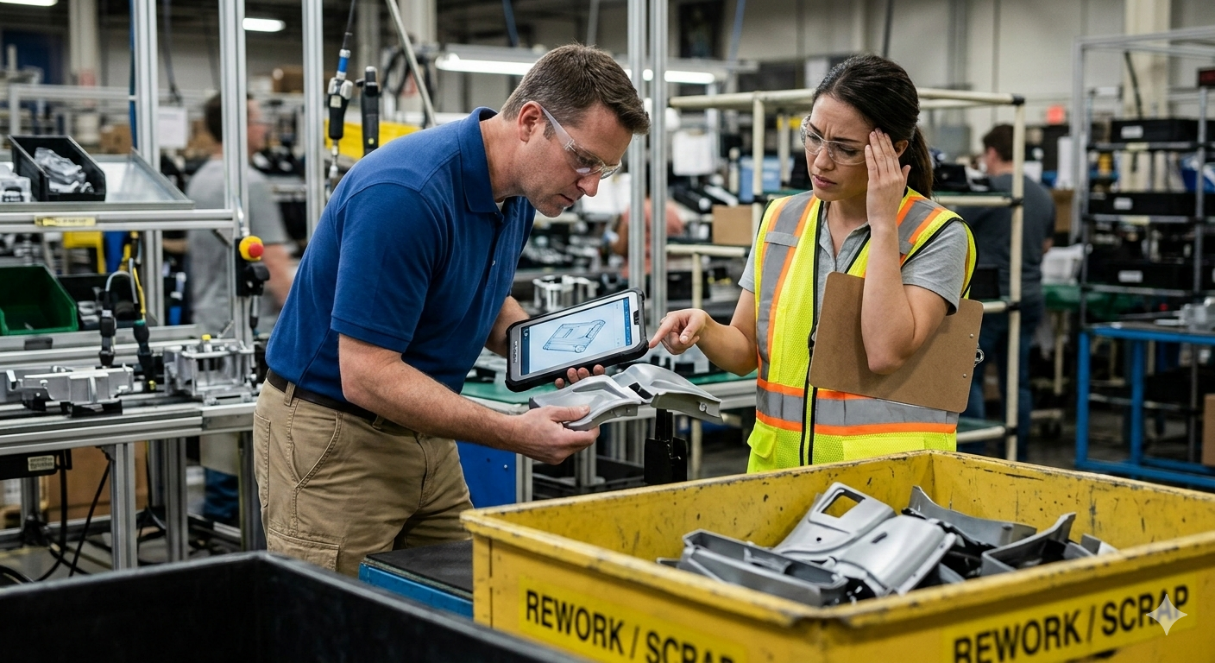
Design handoff matters most when costs are low. The full journey defines robust engineering.
Tool-Safe Design and Capital Risk
Fine changes happen smoothly when tools stay protected during work that shapes metal. Length shifts take place safely, avoiding any need to slice through solid parts.
Without tool-safe planning:
- Capital risk increases
- Tooling modification cost rises
- DFMEA findings surface too late
Finding faults early beats fixing them late when making lots of items. That check before spending money isn’t extra – — it prevents escalating manufacturing rework cost and stops larger production and tooling problems later.
Supplier Variability and Design Instability
Facts about suppliers tend to vanish when cutting costs drives design choices.
Supplier capability analysis should consider:
- Process constraints
- Historical drift patterns
- Alternate material validation
- Approved Supplier List (ASL) alignment
The cost of ignoring vendor process limitations is repeated redesign due to supplier capability mismatch.
Designing products based on real supplier data prevents manufacturing supply chain risk.
Time-to-Market Delays from Rework
The cost-of-change curve in product development shows that changes become exponentially more expensive later in the lifecycle.
Delayed launch affects:
- Revenue realization
- Competitive positioning
- Cash flow forecasts
- Market credibility
The lifecycle cost multiplication effect often reaches 10× compared to early engineering investment, significantly increasing overall manufacturing rework cost.
Proven Strategies to Reduce Manufacturing Rework Cost in US and Europe
Fixing mistakes later takes more work than building it right the first time. A clear plan beats scrambling after things go wrong. This is especially true in structured engineering outsourcing for US manufacturing SMEs, where validation discipline determines whether production scales smoothly or spirals into rework.
Engineering Validation Before Tooling
Pre-tooling risk validation includes:
- DFMEA process review
- Statistical tolerance stack-up
- Digital feasibility simulation
- Supplier capability confirmation
- Pilot production risk mitigation
Fresh off the drawing board, avoiding fixes in bulk manufacturing kicks off well before any metal gets shaped.
Simulation-Driven DFMA
Modern manufacturing simulation tools enable:
- DFA efficiency modelling
- Assembly variation management
- Tooling interference detection
- Ergonomic validation
- Yield improvement forecasting
Because simulations guide design choices early, factories waste less material when building lots of parts. This also helps new production lines run smoothly from the start.
Early Process Capability Alignment
Aligning functional tolerances with real Cp/Cpk capability prevents:
- Spending too much on precision work adds cost without benefit
- Poor fit assembly problems
- Margin erosion due to part precision
Anyone cutting costs really ought to rely on statistical tolerance analysis. It just makes sense when trying to save money without guessing.
Cross-Functional Engineering Ownership
Something often missed adds expense quietly. Ownership gaps during product stages do that.
Strong engineering organizations ensure:
- Design-to-production accountability
- Engineering support during tooling
- Post-release change management
- Cross-functional coordination with suppliers and operations
Because lifecycle engineering is clearly owned, outside teams face fewer surprises once work shifts hands. Ownership gaps that lead to late-stage fixes simply fade when responsibility stays fixed from start to finish.
Conclusion
Faults in product aren’t accidental. Built-in flaws usually come from rushed design rules, loose specs, mismatched suppliers, or unclear responsibility across product stages. all of which silently increase manufacturing rework cost over time. In highly regulated and capital-intensive environments across the US and Europe, these upstream weaknesses amplify faster because labor, compliance, and tooling investments carry higher financial exposure.
Fewer errors on the shop floor often start with smart planning long before manufacturing begins. When teams blend design for assembly into early modeling, mistakes lose their chance to grow. Running numbers through variation forecasts helps spot weak points ahead of time. Building checks that keep tools from crashing cut surprises during setup. Working across departments without silos lets insights move faster than problems.
What cuts real costs isn’t cutting corners on design. Stronger solutions – built sooner, tested deeper, managed throughout a product’s life – are what shift the needle. Real savings grow from smart work up front, not last-minute swaps or rushed fixes down the line.
Starting with limits found on actual factory floors shapes smarter early choices. Because of this, making things gets smoother fast. Production lines settle into a rhythm quicker than usual. Profit space stays intact when reality guides the blueprint.