August 2025

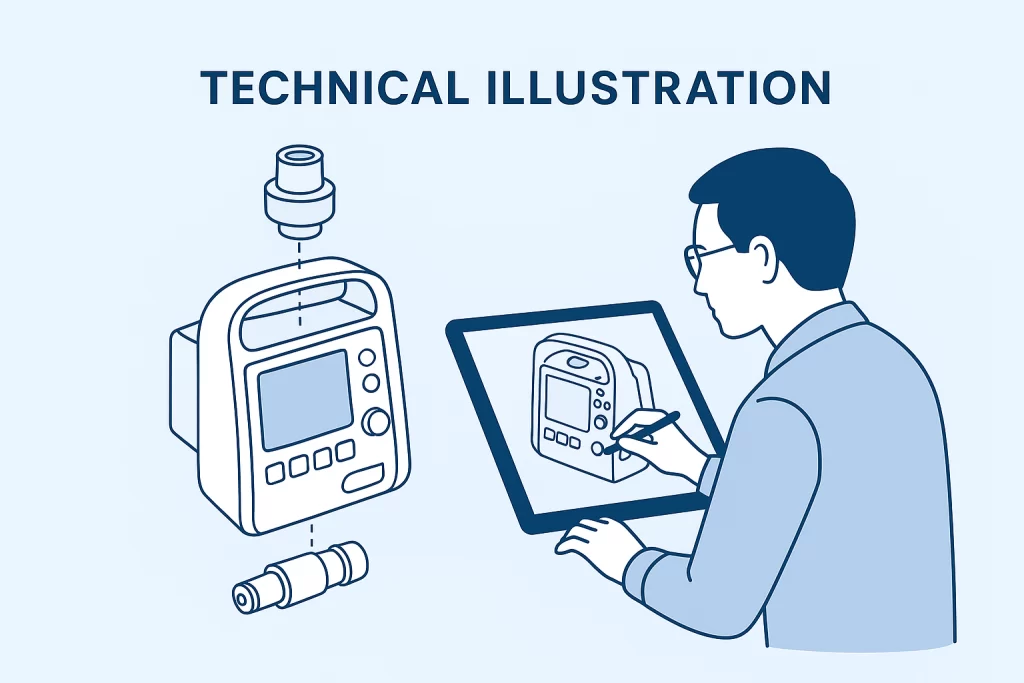
Engineer creating a CAD technical illustration and exploded view for product documentation

Engon Technical Illustrations

Case Study: How Engon Improved Medical Device Documentation with Technical Illustrations & As-Built Engineering About the Challenge A leading medical emergency equipment manufacturer faced serious challenges with their product documentation. Their user manuals were inconsistent, often based on design-oriented models rather than the actual as-built products. This mismatch created confusion, customer dissatisfaction, and potential safety risks. In the highly regulated medical devices industry, clear, compliant, and user-friendly documentation is not optional—it’s critical. Compliance with FDA, CE Marking, and ISO standards was also being compromised due to these inconsistencies, making the need for accurate documentation even more urgent. Before scenario: Manuals lacked clarity, numbering systems were inconsistent, and illustrations failed to reflect the real products. After Engon’s intervention: Manuals were standardized, part numbering was streamlined, illustrations were updated with accurate 3D models, and compliance was ensured. Engon’s Approach Our team at Engon Technologies began by engaging with key stakeholders to understand pain points in documentation and communication. We quickly identified that the root cause was reliance on design models instead of real as-built models. To resolve this, we: Standardized part numbering systems to ensure consistency across manuals and reuse of parts. Reproduced and updated 3D engineering models into high-quality graphical assets tied to the actual product. Developed technical illustrations that were optimized for each stakeholder group—engineers, operators, and maintenance teams. Created compliant, user-focused documentation aligned with FDA, CE, and ISO standards, making manuals easier to understand and safer to use. Solutions Implemented Engineering Drafting Solutions: Clear, precise drawings that eliminated ambiguity. Technical Illustration Services: Optimized visuals to communicate processes, assembly, and product functions. As-Built Engineering Documentation: Comprehensive documentation based on actual product builds, not just design files. These solutions transformed the client’s manuals from inconsistent and confusing to structured, accurate, and visually engaging. Results & Impact The results were immediate and significant: Reduced customer complaints by 40% thanks to clearer manuals. Improved documentation clarity, leading to faster adoption by technicians and safer product handling. Increased customer satisfaction by providing user-friendly manuals. Reduced support queries and after-sales issues through clearer communication. Enhanced trust and brand reliability as customers experienced seamless documentation and maintenance processes. “The systematic application of standardized documentation and technical illustrations by Engon dramatically improved communication across our teams and with end-users.” – Client Feedback Why Partner with Engon Technologies? Our due diligence and smart performance have made Engon Technologies a trusted outsourced engineering partner for businesses worldwide. Whether it’s technical illustration services, engineering drafting solutions, or as-built engineering documentation, we provide customized, reliable, and scalable solutions. Need clear, compliant, and user-friendly documentation for your products?Let Engon Technologies transform your manuals and illustrations into tools that drive customer trust and safety. Request a Consultation

Engon Technical Illustrations Read More »

The Rise of Distributed Mechanical Design Teams: How Outsourced Engineering Is Changing the Game in 2025

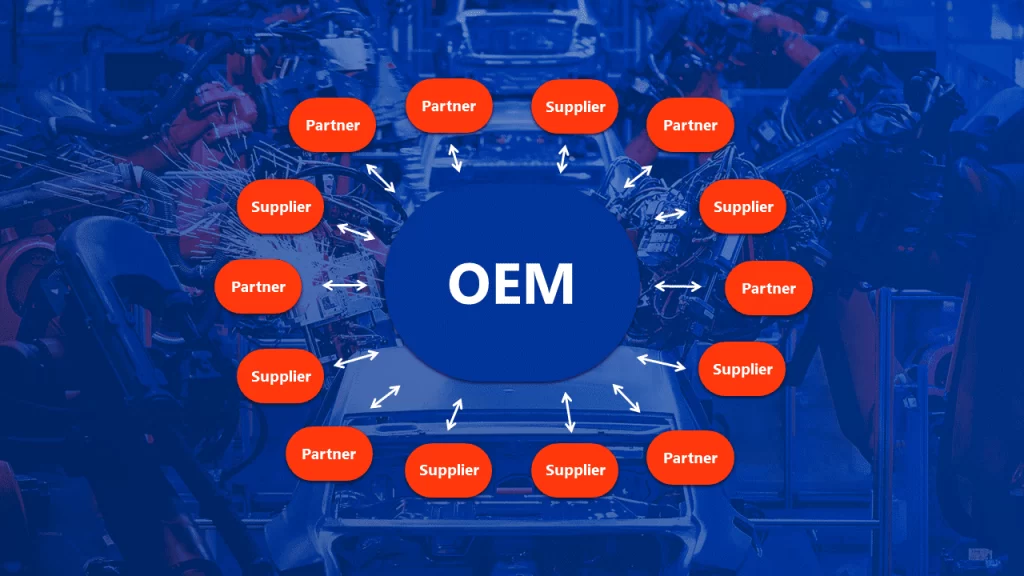
The field of mechanical engineering has always changed with new technologies and work methods. In 2025, however, the speed of change is quicker than ever. Companies no longer restrict product development to in-house teams or offices in their region. Instead, they are adopting distributed mechanical design teams, which consist of groups of engineers, designers, and specialists spread across different countries but who work together seamlessly. This transformation is made possible by Engineering-as-a-Service (EaaS), the growing impact of AI-driven CAD workflows, and the balance between overseas and local talent. Together, these factors are creating a new era where innovation happens faster, costs are lower, and collaboration is more flexible. For manufacturers, startups, and small to medium enterprises in the US, the question is no longer whether to look into outsourcing. The real question is which partner can help unlock the full potential of distributed design. That is where Engon Technologies comes in. As a mechanical engineering services company, Engon serves as a trusted extension of its clients’ product development teams. It combines the efficiency of offshore work with compliance to US standards and protection of intellectual property. In this blog, we will examine four key aspects of this change:- The rise of EaaS in mechanical engineering. The effect of AI on CAD workflows. The balance between offshore and local talent. How to effectively vet distributed engineering partners. By the end, you will understand why companies across the US are choosing Engon Technologies for reliable, efficient, and future-ready mechanical product development services. Trend: Rise of Engineering-as-a-Service (EaaS)  What EaaS Means in Mechanical Engineering EaaS is a modern approach that allows businesses to access on-demand engineering resources rather than building large in-house teams. It functions like a subscription or partnership model, where clients “rent” expertise, infrastructure, and design capabilities as needed. For mechanical engineering, EaaS allows companies to avoid investing in costly CAD licenses, full-time teams, or large R&D facilities. Instead, they can connect with providers like Engon Technologies, who deliver similar value—sometimes even more—at a lower cost. Why Distributed Design Teams Are Becoming the “New Normal” for Product Development In today’s digital-first world, physical location is no longer a barrier. Cloud-based collaboration tools, real-time design platforms, and secure communication systems let engineers from different countries work together as if they were in the same room. This shift has made distributed design the standard approach. Companies are realizing they can keep their projects moving around the clock by leveraging teams across multiple time zones. While one group finalizes CAD models in India, another group in the US can start reviewing them. This cycle saves time and promotes a more diverse pool of ideas and solutions. How EaaS Lowers Cost-to-Market and Speeds Up Innovation for US Manufacturers Launching a new product is always a race against time. Delays increase expenses and hurt competitiveness. With EaaS, manufacturers reduce hiring processes, avoid long training cycles, and eliminate the costs of maintaining a full engineering department. As a result, the cost-to-market decreases, allowing products to transition from idea to prototype to production more swiftly. For US businesses, this means they can experiment more, launch products faster, and seize opportunities before their competitors. Tie-in to Engon: Engon’s Service Model as a Ready-to-Plug-In Engineering Arm for OEMs At Engon Technologies, we go beyond standard mechanical product development services. Engon do not simply provide a service; it functions as a seamlessly integrated engineering arm for our clients. Whether you are an OEM needing help with large-scale projects or a startup requiring rapid prototyping, Engon offers a flexible team that integrates directly with your process. With Engon, businesses can focus on innovation and strategy while knowing that design execution, CAD modeling, and prototyping are handled by experts. Impact of AI Tools on CAD Workflows  Examples of AI-Powered CAD Automation in 2025 AI has shifted from being a buzzword to a practical everyday tool for engineers. In 2025, CAD platforms utilize AI for tasks like:- Generative design, where software suggests multiple optimized design options based on the goals outlined by engineers. Automated stress analysis, which quickly evaluates structural stability. Design validation, which compares models against compliance guidelines. These tools empower engineers to accomplish more in less time, rather than replacing them. How AI Reduces Rework and Accelerates Prototyping Cycles One of the biggest challenges in product design has always been rework. When errors are discovered late in the process, entire prototypes must be redone. AI helps mitigate this issue by catching problems early. Engineers can test numerous variations virtually, well before materials are ordered. This speeds up design-cycles and ensures that when physical models are made, they are much closer to being ready for the market. Companies can move from concept to production in weeks instead of months. Case Example: How AI + Engon’s Expertise = Faster Delivery & Fewer Design Errors At Engon Technologies, AI is an integral part of the design process. The company pairs AI-powered tools with human expertise to ensure accuracy and innovation. For instance, when collaborating with an SME developing an industrial component, Engon employed AI-driven generative design to propose lighter yet stronger variations. Engon’s engineers reviewed these options, chose the best, and confirmed compliance. This led to a more efficient product delivered ahead of schedule, saving the client both time and money. Streamline your workflow with a free process audit. Engon Technologies helps businesses identify opportunities to boost efficiency and drive innovation. Through our complimentary assessment, we reveal how workflows can be streamlined, costs minimized, and product development accelerated. This provides businesses with an easy, no-obligation opportunity to see the value for themselves. Get My Free Audit Offshore vs Local Talent Balance  Cost and Skill Differences Between Offshore and US-Based Engineers Offshore teams, particularly in India, provide highly skilled engineers at competitive prices. They excel in CAD modeling, design execution, and iterative enhancements. Meanwhile, US-based engineers often prioritize client communication, compliance, and industry-specific knowledge. Both groups contribute value in different ways. Offshore talent offers efficiency and scale, while local talent ensures alignment with market needs

The Rise of Distributed Mechanical Design Teams: How Outsourced Engineering Is Changing the Game in 2025 Read More »

Top 7 Reasons to Outsource Mechanical Engineering Design as a Small Business

In today’s competitive business landscape, startups, small and medium-sized enterprises (SMEs), and established OEMs are always seeking smarter ways to innovate, cut costs, and speed up product launches. One growing strategy is to outsource mechanical engineering design to specialised firms that bring technical expertise, flexibility, and measurable results. According to recent research on global engineering outsourcing growth, many companies are increasingly turning to outsourced engineering teams to stay agile, reduce overheads, and accelerate development cycles. With access to skilled talent, modern CAD/CAE tools, and industry experience, outsourcing mechanical engineering has become a strong driver of growth. If you’re a business owner, OEM leader, or startup founder exploring efficient product development, this article will outline the top 7 reasons to consider outsourcing your mechanical design consultancy. At Engon Technologies, we work with startups and SMEs globally, offering customised mechanical engineering services that help them build, improve, and innovate. Reduce Design Costs without Compromising Quality  A major benefit of outsourcing is its cost-effectiveness. Building and sustaining an internal design team involves substantial fixed and hidden costs, including hiring, salaries, infrastructure setup, software licensing, staff training, and employee perks.  For small business mechanical consulting, these overhead costs can quickly become unsustainable, especially when design demand varies. Outsourcing allows you to: Avoid long-term payroll commitments Access to design talent only when needed, small business mechanical consulting Invest in results, not staff counts Decrease errors that result in costly rework At Engon, we use a value-based pricing model, which means clients only pay for the work done. Our track record in high-precision fields like automation, agriculture, and packaging shows that clients can save 30 to 50% compared to hiring internally. This is not about cutting costs; it’s about maximising value while ensuring quality. Discover how Engon Technologies cut tooling cost by 60% and lowered per-part production cost by 40% for an automotive supplier through value engineering and blow moulding. See the full Automotive Cost Reduction case study → Read it here. Accelerated Project Timelines with On-Demand Expertise  In engineering, speed is critical. The faster you confirm your design, the earlier you can move to prototyping, testing, and launching your product to market. Unfortunately, in-house teams often run into obstacles due to hiring delays, tool limitations, or a lack of specialised skills. Outsourced mechanical engineering services provide your business with: Readily available design engineers Specialised skills in simulation, modelling, and prototyping Streamlined workflows that allow for concurrent tasks Time zone benefits for round-the-clock productivity At Engon, our clients benefit from a structured sprint-based delivery model. By breaking projects into manageable milestones, we minimise downtime and offer weekly progress updates, ensuring your designs move quickly from concept to completion. For one of our automation clients, outsourcing reduced the design cycle from 10 weeks to just 5 weeks while also enhancing accuracy and simulation coverage. Access to Specialised Talent and Cutting-Edge Tools  Mechanical design today involves much more than just creating drawings. It includes complex system modelling, performance simulations, material selection, stress analysis, and optimising manufacturability. Most small businesses cannot justify investing in: – Costly CAD/CAE tools (e.g., SolidWorks, ANSYS, Creo, AutoCAD) Simulation software (e.g., CFD, FEA, motion analysis) Engineers trained in various industry sectors The shortage of skilled mechanical engineers reported by ASME makes outsourcing a strategic way for small businesses to tap global expertise and stay competitive. With Engon as your mechanical design consultancy, you gain access to an experienced team equipped with the tools and expertise needed to design for durability, performance, and manufacturability, without any upfront costs. Our engineers keep up with certifications, standards (ASME, ISO, ANSI), and evolving best practices, so you enjoy both technical accuracy and future-ready design. Flexibility and Scalability Tailored to Your Business  Whether you’re a startup or a growing OEM, your engineering needs will change. Some months may be slow, while others require rapid research and development. An inflexible in-house team won’t provide the adaptability you need. Outsourced mechanical engineering addresses this need with: On-demand staffing during peak periods Scalable teams that can adjust without disruption Flexible engagement options—hourly, fixed price, or retainer Quick onboarding with minimal management involved Engon provides scalable design services with: Flexible Engagements: Hire us on a half FTE (Full-Time Equivalent) basis to access our expertise while keeping costs low and flexibility high. Strategic Planning Support: Our cross-disciplinary expertise helps you design smart, scalable solutions that drive long-term success. Agile Response to Demand: We adapt quickly to your workload, enabling you to scale operations without delays. This flexibility means you only pay for what you require and can adjust quickly as your priorities change. Stronger Focus on Innovation and Core Strategy  For many business owners, the main goal is not just technical execution but building a scalable company. When your internal team is overwhelmed with CAD revisions, supplier issues, and daily design problems, it limits their ability to concentrate on broader strategy. When you outsource mechanical design to Engon: Your internal resources can focus on strategic initiatives Founders have more time for funding, market research, or business development Product managers can engage more with customer feedback You spend more time innovating, less time on urgent issues “Outsourcing our mechanical design to Engon allowed us to focus entirely on our market strategy. We scaled faster, and the launch feedback from our customers was beyond our expectations.” — Rajesh Mehta, CEO, Innovatech Solutions By removing the engineering bottleneck, we speed up innovation across your organisation. Enhanced Quality Control and Design Assurance  Design flaws can be costly in terms of money, time, and reputation. Quality in engineering is essential; it serves as the foundation of successful projects. We ensure consistent quality across all stages by implementing: Multi-level design reviews Simulation-based validation (FEA, thermal, fatigue) Material compatibility assessments Manufacturing feasibility checks Version-controlled documentation and traceability When you search for mechanical engineering services, you need a partner who prioritises performance and reliability. At Engon, we offer more than technical drawings — we deliver reliability, long-lasting performance, and uncompromising quality. Our structured process reduces human error, ensures compliance with regulations,

Top 7 Reasons to Outsource Mechanical Engineering Design as a Small Business Read More »

Custom IoT Enclosure Development: From Sketch to Prototype

In the fast-paced world of the Internet of Things (IoT), your product is only as good as its enclosure. A well-made enclosure doesn’t just house electronics; it defines durability, usability, thermal management, manufacturability, and brand perception. Whether you’re an engineer bringing your design to life, an entrepreneur with a functional idea, or a design lead guiding a new product roadmap, the right mechanical development path is crucial. At Engon Technologies, we focus on custom mechanical solutions that turn raw ideas into ready-to-manufacture enclosures. In this guide, we outline the journey from sketch to prototype, the tools that can shape your success, and key preparations before you consult a mechanical firm. Why Custom Enclosures Are Important for IoT Success  Off-the-shelf enclosures rarely meet the unique challenges IoT devices face, such as thermal dissipation, sensor placement, waterproofing, antenna clearance, or mounting configuration. As devices become smaller and features multiply, custom mechanical engineering design services become vital. Engon has worked with startups and established OEMs to create enclosures that go beyond looks. We focus on functionality, enabling quick changes and short production runs, particularly in high-mix, low-volume use cases common in IoT. The Process Flow: From Idea to Prototype  While every product development cycle is unique, the foundation remains steady. Here’s how your enclosure develops: Concept Ideation You may begin with a napkin sketch, a block diagram, or a breadboarded electronics board. This initial concept stage is where you define function, user experience, and mechanical constraints. Inputs at this stage include: Target dimensions PCB size and layout Port types and placements Environmental requirements (IP rating, temperature) Aesthetic expectations Engon collaborates early to set realistic manufacturing parameters from the start. CAD Design (Creo, SolidWorks) We use software like Creo and SolidWorks to create detailed 3D models. This stage covers: Internal component fit Fastening methods (screws, snap-fits) Material selection (ABS, polycarbonate, aluminium, etc.) Preliminary draft angles for moldability This is where custom mechanical solutions begin to take shape. Simulation and Analysis Before creating a physical prototype, digital simulations provide valuable insights. These include: Finite Element Analysis (FEA) for structural integrity Thermal simulation for ventilation or heatsinking Drop tests and IP sealing simulations These predictive models help avoid costly retooling and delays. Mechanical Prototyping Services Now it’s time to test in the real world. At Engon, our mechanical prototyping services consist of: 3D printing (SLA, FDM, SLS) CNC machining Vacuum casting for elastomer or rubber parts Sheet metal prototypes for rugged enclosures Based on timelines, functionality, and cost, we guide clients on the best way to validate fit, form, and function. Tools of the Trade: Why Software and Machinery Matter  Our toolbox is built for precision, speed, and iteration. Here’s what we use: CAD Platforms: Creo for parametric design, SolidWorks for assemblies and part libraries Simulation Tools: Ansys, SolidWorks Simulation Prototyping Hardware: Form Labs SLA printers, Tarmac CNCs, and multi-material filament printers Reverse Engineering Services for mechanical parts: 3D scanning and digital reconstruction for redesigning legacy parts or competitive benchmarking Each tool is chosen to speed up your timeline and minimise development errors. How Engon Manages Short Production Runs for IoT Devices  Unlike mass manufacturers, Engon is suited for low to mid-volume production, ideal for IoT startups and agile teams. Here’s how: Modular design practices: We create designs that can scale or be reused across device variants. Vendor partnerships: Our trusted local and offshore partners provide cost-effective manufacturing, even for runs under 500 units. Rapid tooling: For injection moulding, we offer soft tooling or aluminium mould options for quick turnaround and lower initial costs. Design for Assembly (DFA): Each prototype is made with manufacturing in mind to reduce labour and errors. Our mechanical engineering design services are tailored to help you move from prototype to pilot batch with minimal friction. When Reverse Engineering Is Useful  Sometimes, the journey starts with existing designs. You may need to: Redesign an existing enclosure to fit a new PCB Replace discontinued parts with new equivalents Improve legacy designs with modern manufacturing techniques This is where our reverse engineering services for mechanical parts come in. We use precise 3D scanning, tactile measurements, and comparative CAD to reproduce and enhance mechanical components, often adding manufacturability or new features in the process. What to Prepare Before Consulting a Mechanical Firm  To maximise your first consultation with a firm like Engon, be prepared. Here’s a quick checklist: Functional Requirements  What is the enclosure protecting? What’s the user interaction model—wall-mounted, wearable, handheld? PCB and Component Info  Provide accurate CAD files or datasheets. Indicate component height and clearance zones. Environmental Constraints  Waterproof? Dust-proof? Impact resistance? Operational temperature range? User Experience Goals  Do you need LED indicators, touch interfaces, or display windows? Are there ergonomic requirements? Volume Expectations  Are you planning for 10, 100, or 10,000 units? Being prepared leads to faster iterations, better cost predictions, and more realistic timelines. The Engon Advantage: Partnering for Speed and Precision  At Engon Technologies, we design for reality, not just the screen. Our experienced team brings expertise in: IoT hardware enclosures (sensors, gateways, wearables, medical devices) Material optimisation for thermal management Agile design feedback loops Vendor-vetted prototyping and tooling workflows We don’t just deliver CAD files; we deliver clarity. You’ll receive: A development roadmap Design files that meet real-world manufacturability standards Functional prototypes for testing and validating A smooth transition to production Whether you’re working on your first device or your tenth product line, our mechanical engineering design services are designed to reduce friction and speed up innovation. Design Iteration: Why First Prototypes Are Just the Beginning  One common misunderstanding in enclosure design is thinking the prototype will be perfect. In reality, product development, especially for IoT enclosures, is an iterative journey. Your prototype serves as a baseline, not a finished product. It validates whether the components fit, whether thermal issues are manageable, and whether user interaction feels intuitive. But once it’s in your hands, real-world insights start to emerge: – Buttons might feel too stiff. LEDs might not be bright enough through translucent panels. A port might interfere

Custom IoT Enclosure Development: From Sketch to Prototype Read More »